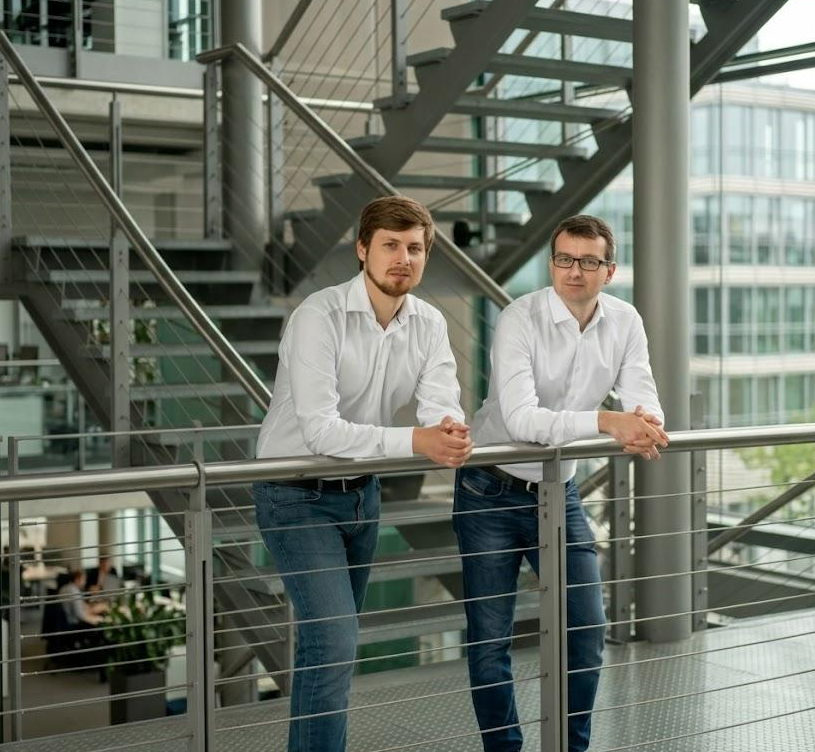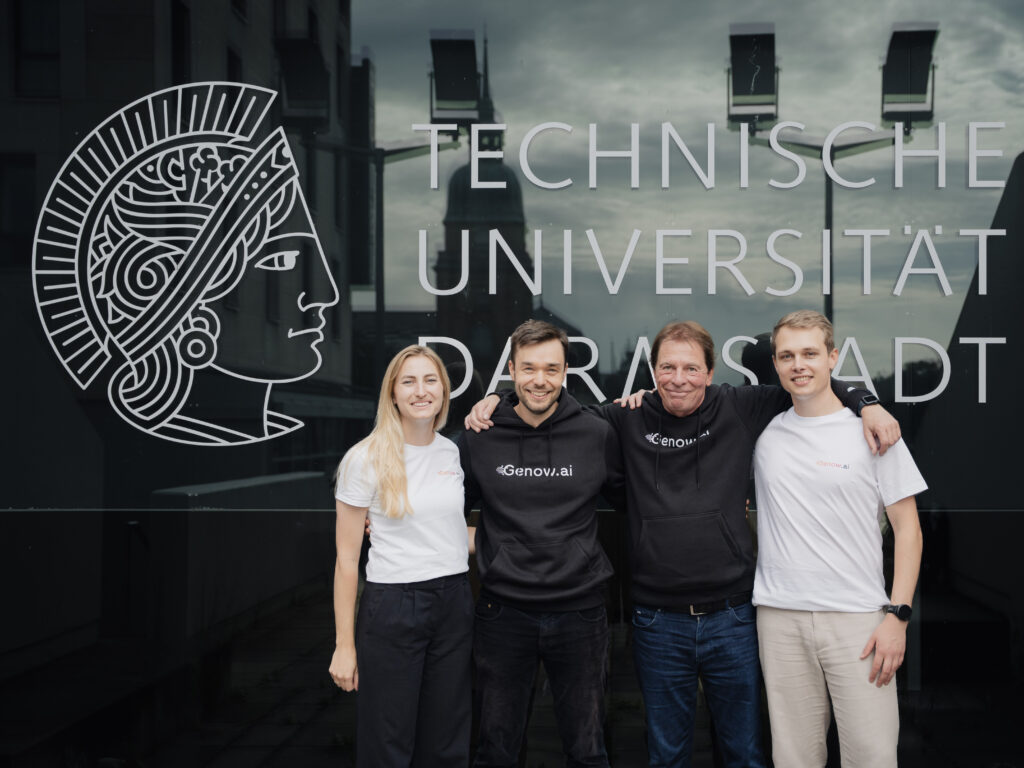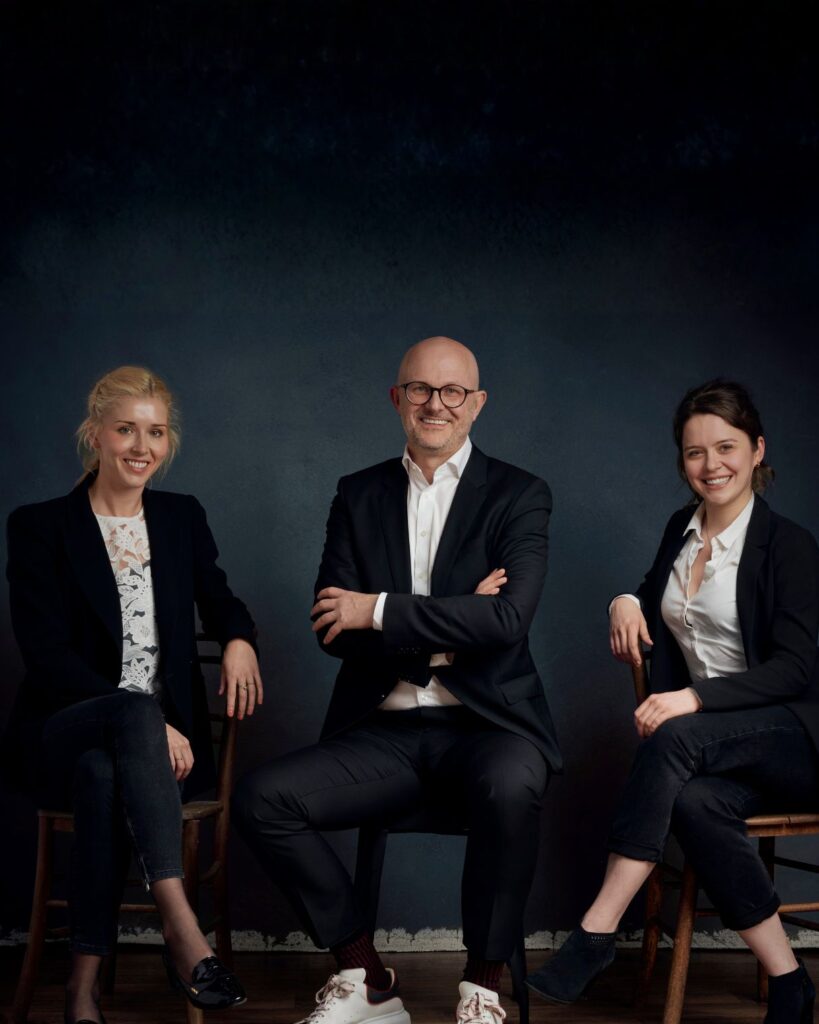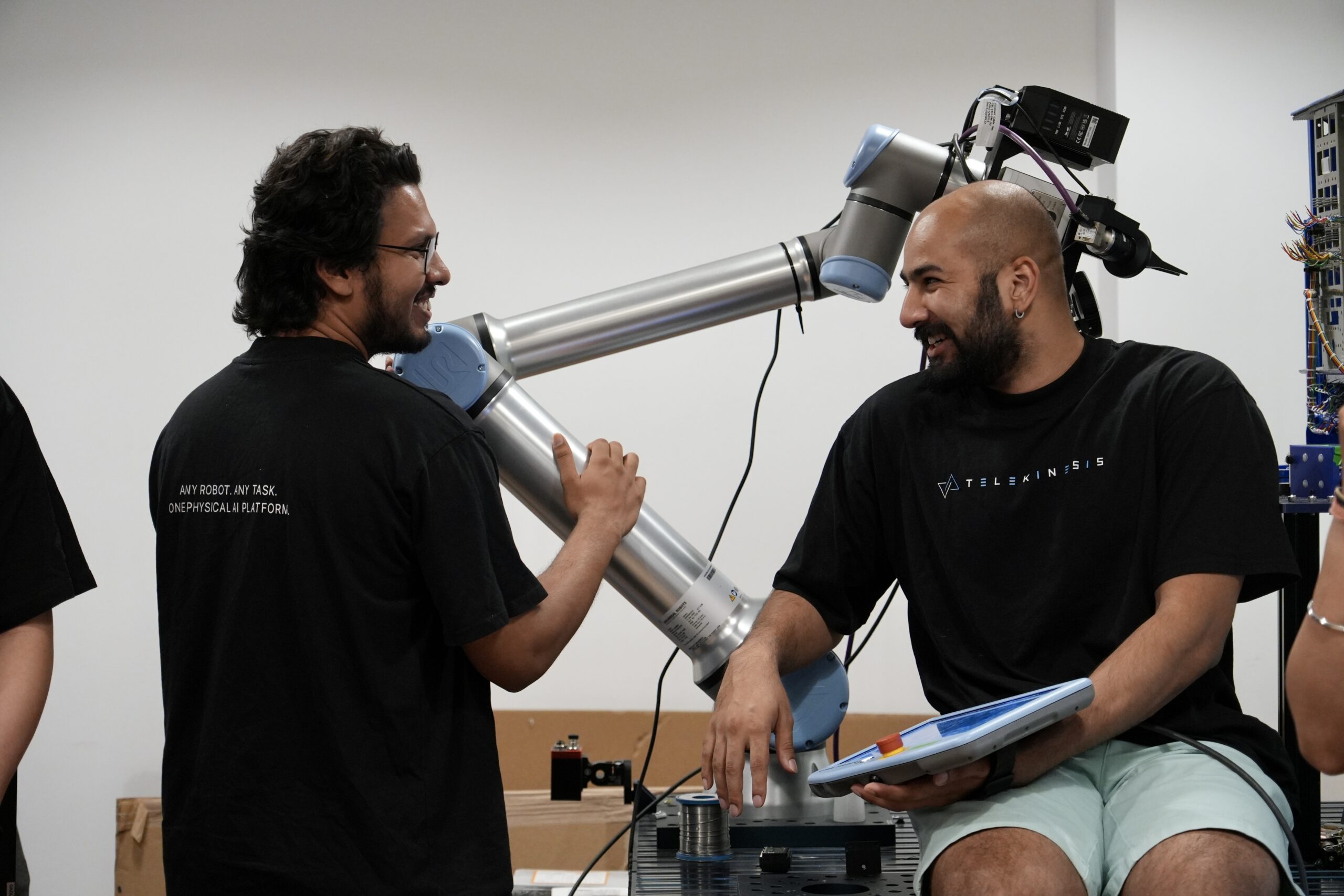
We spoke with Suman Pal and Arjun Vir Datta, the founders of Telekinesis:
1. What problem are you aiming to solve with your startup?
Robots today lack the intelligence to reliably adapt to the complexity of the real world.
Programming robots for anything beyond simple, repetitive tasks requires expensive, highly specialized engineering, making automation too difficult and costly for many small and mid-sized companies to deploy in production.
We’re solving this by building the Agentic Operating System (OS) for Physical AI—the “Android” for robots. Our OS gives robots the intelligence to understand what people ask, reason about how to accomplish it, and learn and reuse skills across different tasks and robots. Our goal is to unlock the next generation of AI-powered robots and make them easy to deploy across manufacturing and eventually the home.
2. Who is behind the idea? Tell us about yourselves: your backgrounds, your path to founding the company, and the moment when it became clear that you wanted to start Telekinesis.
Telekinesis was born out of the Intelligent Autonomous Systems (IAS) Lab at TU Darmstadt, led by Prof. Jan Peters, one of the leading research groups in robotics and AI. The founders, Suman Pal and Arjun Vir Datta, spent years working at the cutting edge of robot learning and artificial intelligence.
Despite working at the forefront of the field, we experienced the same problem firsthand: getting robots to reliably do useful things in the real world was still incredibly difficult. Too much time was spent building and rebuilding the software needed to make robots work. That experience made the opportunity clear. The next breakthrough in robotics would not come from better hardware alone, but from building the intelligence that makes robots truly capable and adaptable. In December 2024, we spun Telekinesis GmbH out of TU Darmstadt to turn this vision into reality.
3. In your view, what are the greatest strengths of your startup – technologically or within the team?
Our greatest strength is the combination of world-class robotics expertise, deep industry experience, and strong backing. Our founding team comes directly from the Intelligent Autonomous Systems Lab at TU Darmstadt, one of the leading robotics and AI research groups, giving us deep expertise at the frontier of robot learning and Physical AI.
We are also backed by senior leaders from the robotics industry, including former CEOs of KUKA and Universal Robots, who bring decades of experience scaling robotics companies and bringing technology into the real world. Combined with the support of leading investors, this gives us a unique combination of cutting-edge technical talent, industry know-how, and the resources to build and scale the company.
4. What’s next for your startup? Which next steps are you planning in the short and long term?
We have already released the beta version of our Agentic OS and are working with major industry players, including Deutsche Bahn, Infineon, and others, to bring intelligent robotics into real-world production environments.
In the short term, our focus is on deploying more robots across the DACH region, proving the technology at scale and building a strong base of customers and partners. In the long term, we plan to expand internationally with the ambition of making Telekinesis the de facto operating system for intelligent robots worldwide.
5. Founding a company comes with highs and lows. What has been your most important lesson learned so far?
The most important lesson we’ve learned is that you will fail far more often than you succeed. In a startup, ideas don’t always work, customers say no, and things inevitably break. We’ve learned that failure is not the exception, it’s part of the process. The real differentiator is persistence. The companies that ultimately succeed are often not the ones that never fail, but the ones that keep learning, adapting, and moving forward when things don’t work. You have to keep going.
6. Which book, tool or framework is an absolute must-have for founders in your opinion – and why?
The Lean Startup by Eric Ries is a must-read for any founder. Its core principle is simple: don’t spend months building something you assume people want, instead rapidly prototype, test, learn, and iterate.
As a startup, especially in a deep-tech market like robotics, it is easy to get caught up in technology and build what you think is possible rather than what customers actually need. The Lean Startup taught us to validate assumptions early, talk to customers continuously, and let real-world feedback drive what we build.
7. Please complete the sentence: “FrankfurtRheinMain is for me…“
…the heart of the next revolution in robotics.
8. You promise: “Any robot. Any task. One Physical AI platform.” – in which situations on the factory floor does this flexibility make the biggest difference for your customers from your perspective?
The biggest opportunity is small-batch and high-mix manufacturing, which is at the heart of the German Mittelstand. These companies often produce many different products or variants in relatively small quantities, so traditional automation is difficult to justify: by the time a robot is programmed for one task, production has already changed.
Our Agentic OS allows robots to understand new tasks, adapt to changing production requirements, and reuse existing skills instead of being programmed from scratch every time. This makes automation economically viable for SMEs that have historically been unable to justify the cost and complexity of robotic automation.
For the Mittelstand, the promise is simple: robots that adapt to the factory, instead of forcing the factory to adapt to the robot.
9. With digital twins and simulation, you aim to make robot deployment “risk-free”. How does this approach concretely change the way companies plan and roll out new robotics solutions today?
Digital twins allow companies to design, test, and validate robotic applications virtually before deploying them on the factory floor. This reduces commissioning time, avoids costly downtime, and lets SMEs see the expected performance and ROI before investing in physical deployment.
In short: test it in the digital world first, then deploy it in the real world with confidence.